PTSD Service Dogs
Reduce Triggers. Regain Freedom. Build Confidence.
PTSD service dogs help reduce the impact of traumatic triggers and ease the challenges of being in public. They provide a steady, non-judgmental presence that helps ground individuals during rising anxiety and shift focus outward rather than inward.
As an ADI-accredited organization, SDV trains dogs to support without encouraging guarding, protecting, or threat-searching behaviors. Veterans who receive service dogs from ADI-accredited groups may also qualify for VA assistance with veterinary care, specialized equipment, and travel expenses.
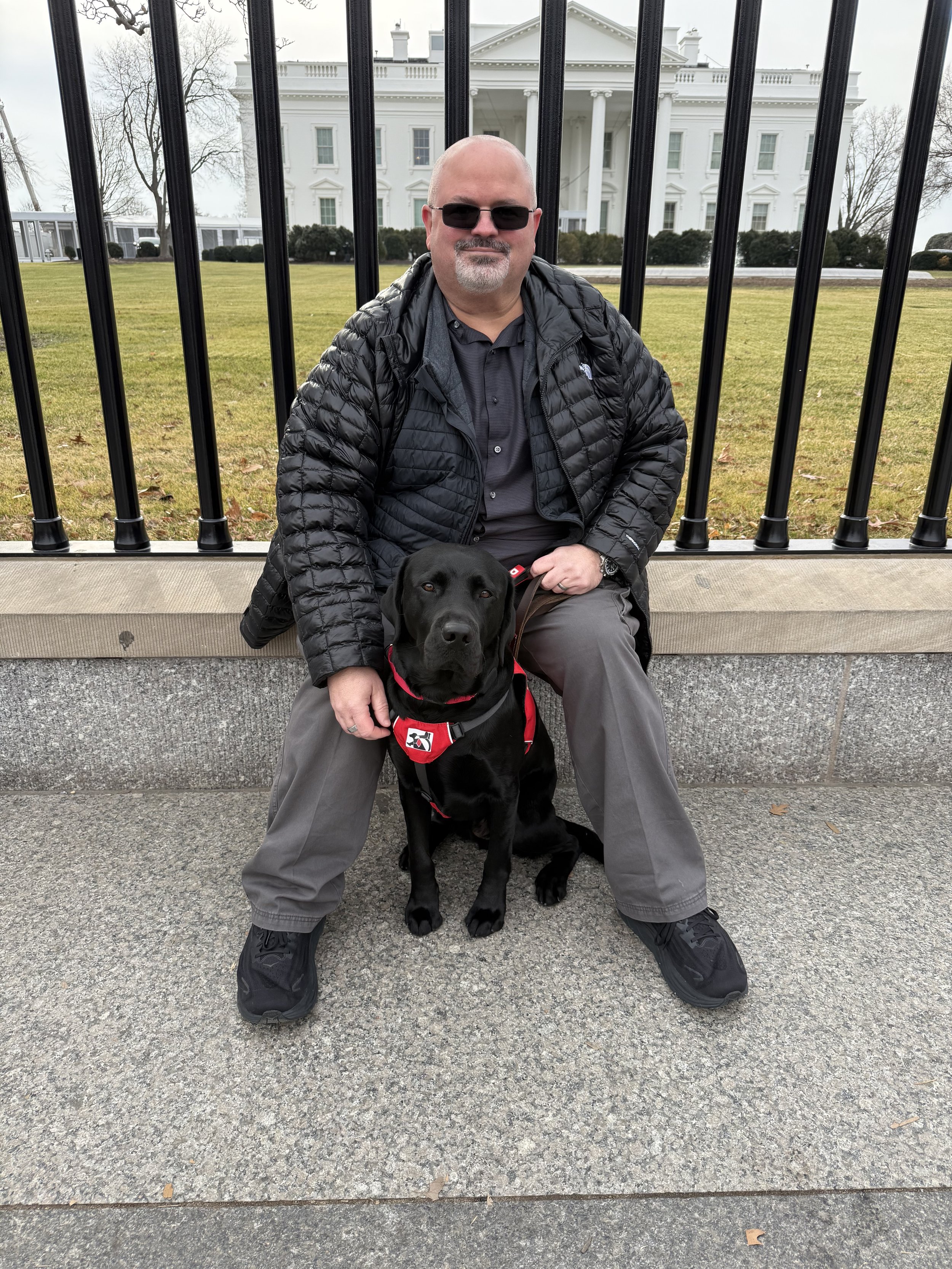
Meet Jonathan and SDV Remy
Jonathan spent his career running toward the moments most people spend their lives avoiding — paramedic, firefighter, dive team commander, SWAT team member. He held steady so others could survive. That kind of service leaves a mark.
When the uniform came off, the weight didn't. Remy is the partner who meets Jonathan in those moments — interrupting nightmares, grounding him through anxiety, and providing the steady presence that makes it possible to move through the world again.
For a man who spent years being the calm in someone else's storm, Remy became his.
“There are still hard days. PTSD does not simply disappear. But Remy has helped me reclaim pieces of myself that I thought were gone forever. Because of Remy, I move through the world with more confidence, more peace, and with more resolve.”
How They Help
PTSD Service Dogs are trained to:
Interrupting common anxiety behaviors like leg shaking or hand wringing
Interrupting nightmares
Providing various forms of comforting physical contact on request
-
Must be at least 18 years of age
Must be an active duty, veteran, or 1st responder
PTSD must be service and/or work related
Must be engaged in a therapy program(s) for a minimum of six months
Please see Applicant Criteria for more criteria
-
Learn How to Apply for a service dog
-
Eligibility & Application Process
After serving in the Navy, Donnie recognized he needed extra support transitioning to civilian life. Palmer helps him visit places he’s been hesitant to go and eases his anxiety with deep pressure hugs and gentle reminders.
Watch the video to hear Donnie’s story.